
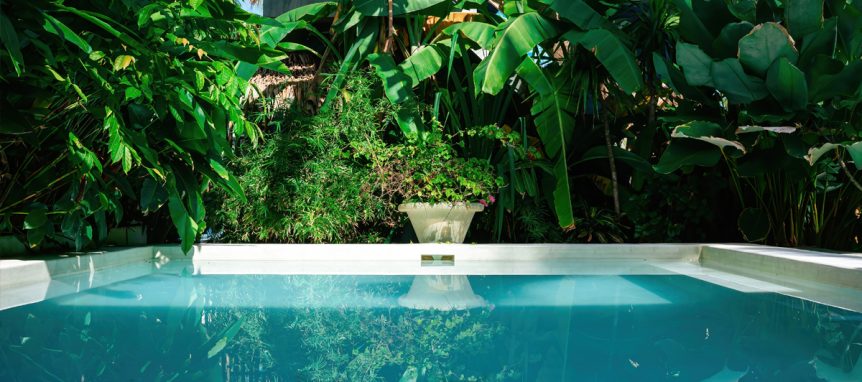
One of the first decisions homeowners face when designing a custom pool is choosing its overall shape. While there are countless possibilities with a custom design, many pools fall into two broad categories: geometric and freeform. Each creates a distinctly different look, and the right choice depends on your home, property, outdoor living space, and personal style.
Because a pool becomes such a prominent feature of the backyard, its shape should feel connected to everything around it. At South Florida Custom Pools, the design process considers the entire property so the finished pool feels like a natural extension of the home rather than something simply placed in the backyard.
What Is a Geometric Pool?
Geometric pools are characterized by defined lines, structured shapes, and intentional angles. Rectangular pools are a classic example, although geometric designs can incorporate multiple angles, sections, and dimensions to create something much more customized.
These pools are particularly well suited to contemporary and modern architecture. Straight lines can echo the shape of a home, patio, or surrounding hardscape, helping establish a clean and cohesive appearance throughout the property.
Geometric pools can also create a strong sense of organization within an outdoor living area. Their defined edges make it possible to establish clear relationships between the pool, lounging areas, landscaping, and other backyard spaces.
The Appeal of Freeform Pool Design
Freeform pools take a softer approach. Instead of relying primarily on straight lines and defined angles, they use curves and flowing shapes to create a more organic appearance.
This style can work beautifully in backyards where homeowners want the pool to blend naturally with landscaping and other outdoor elements. Curves can soften the appearance of the space and create a relaxed atmosphere that feels less formal than a highly structured geometric layout.
A freeform design doesn’t have to mean an elaborate or irregular pool. Even subtle curves can change the character of a backyard and provide a softer visual transition between the pool and its surroundings.
Consider Your Home’s Architecture
The architecture of the home is an important starting point when choosing between geometric and freeform designs. A modern residence featuring strong horizontal and vertical lines may naturally lend itself to a geometric pool. A home with softer architectural details or extensive tropical landscaping may pair beautifully with a freeform design.
However, there are no universal rules. Contrasting styles can sometimes create interesting results when handled thoughtfully. What matters most is ensuring that the pool, home, and outdoor living areas look intentional when viewed together.
A custom pool should enhance the existing property rather than compete with it.
Think About the Available Backyard Space
The size and configuration of the backyard can also influence pool shape. Narrow properties may benefit from a streamlined geometric layout that uses available space efficiently. Larger or unusually shaped properties may provide opportunities for sweeping curves or more elaborate custom configurations.
Pool placement should also leave adequate space for the rest of the backyard. Seating areas, patios, landscaping, walkways, and other outdoor features all need to be considered during the planning process.
Rather than selecting a pool shape independently, homeowners can benefit from looking at the backyard as one complete environment.
Consider How You Plan to Use the Pool
Appearance is only one part of choosing a pool shape. How you plan to use the pool should also influence its design.
Homeowners interested in swimming and active recreation may appreciate the defined swimming area provided by a longer geometric layout. Families focused on relaxation and entertaining may prefer a design that incorporates different gathering areas, shallow sections, built-in stairs, or other custom elements.
Both geometric and freeform pools can be designed around a variety of lifestyles. The advantage of custom construction is that the shape can be adjusted around the homeowner rather than forcing the homeowner to adapt to a predetermined design.
Custom Gunite Construction Expands the Possibilities
South Florida Custom Pools builds every pool with a steel-reinforced gunite shell. This construction method provides tremendous flexibility when developing the pool’s shape, dimensions, depth, and overall configuration.
That flexibility means homeowners aren’t limited to choosing between a basic rectangle and a predetermined curved shape. A geometric pool can incorporate unique angles and architectural details, while a freeform pool can be shaped specifically around the property and landscaping.
The result is a pool designed specifically for the space rather than a one-size-fits-all solution.
Finding the Design That Fits Your Backyard
Choosing between a geometric and freeform pool ultimately comes down to finding the design that works with your home, property, and vision for the backyard. During the consultation and site evaluation, Owner Ryan Slack can assess the available space, discuss your preferences, and help determine how different design approaches could work within your property.
At South Florida Custom Pools, every new pool is approached as an individual project, with careful attention to how the design will look and function within the surrounding environment. Whether you prefer crisp architectural lines or softer, flowing curves, contact South Florida Custom Pools today to begin creating a custom pool designed specifically for your backyard.